A consultancy hired to assess phosphate imports from occupied Western Sahara into New Zealand concludes there is no problem.
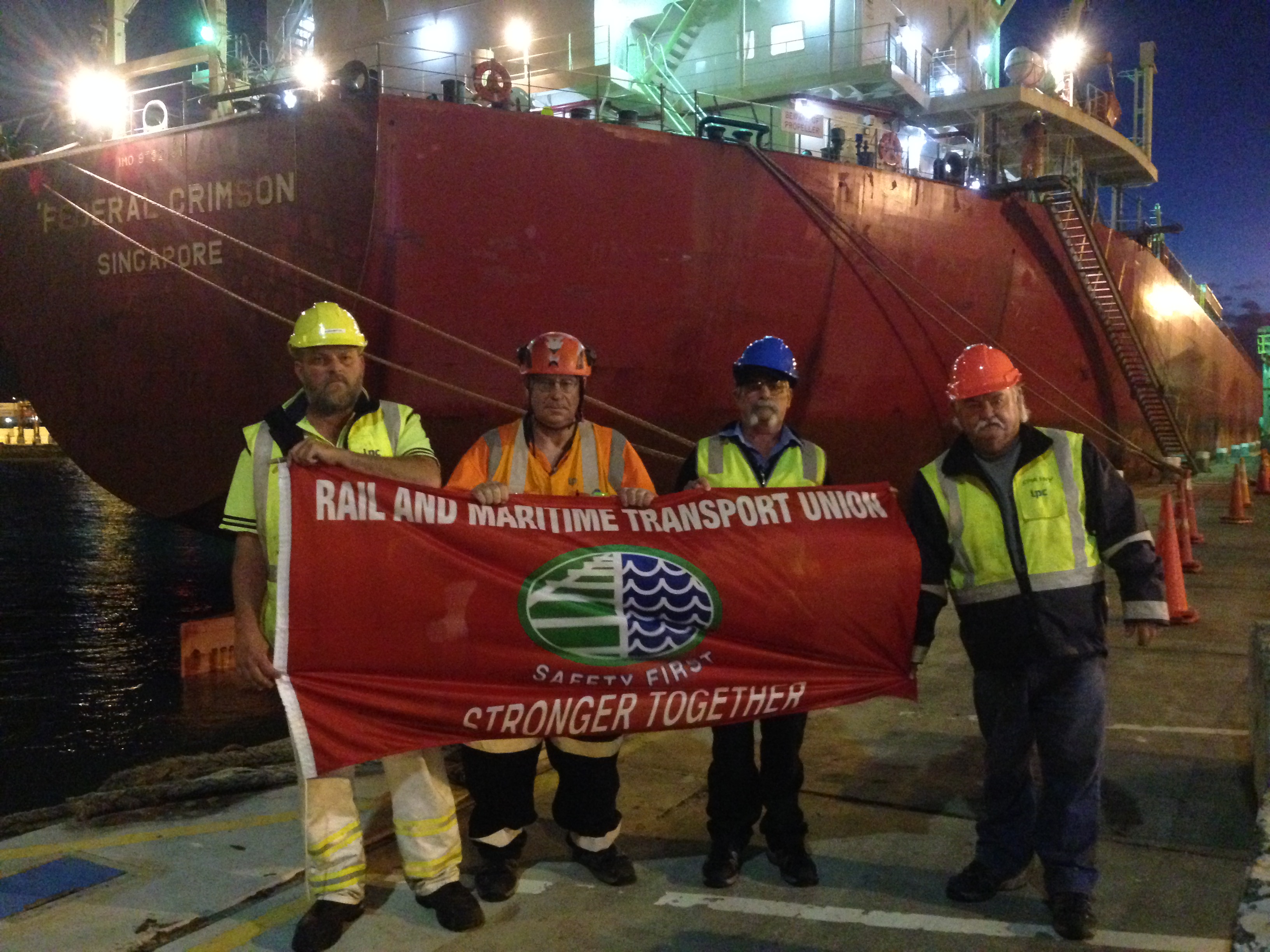
Photo: Members of the Rail and Maritime Transport Union handed over a letter of protest to the captain of the bulk carrier Federal Crimson - carrying 50,000 tonnes of phosphate from occupied Western Sahara into New Zealand. December 2019, Lyttelton Port. (Photo credit: RMTU) Download
A 2024 assessment by New Zealand consultancy Tūhana Business and Human Rights claims that importing phosphate rock from occupied Western Sahara can continue in line with international human rights standards.
But a review of the publicly available summary report of the assessment reveals the opposite: an analysis that sidelines international law, misapplies human rights principles, and risks legitimising one of the world’s most long-running unresolved occupations. The report was commissioned by the Fertiliser Association of New Zealand (FANZ), which consists of two members, both importing phosphate rock from occupied Western Sahara.
For decades, the two New Zealand farmer cooperatives have imported phosphate rock from the Bou Craa mine in Western Sahara - a territory recognised by the United Nations as non-self-governing, without an administering power in place. The International Court of Justice has concluded that Morocco has no sovereignty over the territory and has recognised the Saharawi people’s right to self-determination – a conclusion echoed by other international courts in recent years. But that context is absent in Tūhana’s assessment.
Turning a core human right into “background context”
Tūhana’s treatment of the right to self-determination is shocking.
Rather than recognising it as a binding legal norm, the report frames it as a “political dispute” that “predates and transcends” business activity. This framing is not just questionable - it is fundamentally incompatible with international law.
The right to self-determination is not a peripheral concern. It is a cornerstone of international law, enshrined in the UN Charter and affirmed by courts including the International Court of Justice and the Court of Justice of the European Union. These bodies have consistently held that Western Sahara is separate and distinct from Morocco, and that the consent of the Saharawi people is required for economic activities affecting their resources.
By treating this fundamental right as external to business responsibility, Tūhana effectively removes the central issue from its analysis - and in doing so, empties the human rights framework it claims to apply.
A flawed reading of business responsibility
The report concludes that New Zealand importers are not “causing” or “contributing” to harm, but are merely “directly linked” to potential impacts.
In the publicly available assessment, this conclusion is asserted, not demonstrated.
The extraction and export of a finite resource from an occupied territory without the consent of its people is not a neutral transaction. It generates revenue, sustains infrastructure, and lends legitimacy to the occupying power’s presence.
Under the United Nations framework on business and human rights, such involvement raises serious questions about contribution to harm - especially in a context where economic activity may entrench an unlawful situation.
Tūhana’s narrow interpretation risks setting a dangerous precedent: that companies can remain passive participants in occupation economies without any responsibility.
In 2018, the High Court of South Africa ruled that a phosphate cargo exported from Western Sahara to New Zealand was illegally acquired, as the Saharawi people had not given its consent to the trade. Similar conclusions have been made by numerous international investors, such as the Norwegian Government Pension Fund, leading to all stock-exchange registered companies globally abandoning the trade.
Consultation without consent
The report acknowledges restrictions on freedom of expression in Western Sahara - yet still relies on stakeholder engagement processes conducted under Moroccan control.
This stakeholder process, in turn, conflates consultation with consent.
International law is clear: the relevant standard is the consent of the people of the territory. Consultation processes conducted in a repressive environment cannot meet this requirement.
By lowering this threshold, the assessment risks providing a blueprint for bypassing fundamental rights in politically sensitive contexts.
Justifying exploitation through dependency
Perhaps most strikingly, the report suggests that halting phosphate extraction could harm local communities by reducing employment and investment.
This argument echoes a familiar pattern: economic dependency is invoked to justify continued exploitation.
But international law does not allow fundamental rights to be traded off against short-term economic benefits - particularly when those benefits arise within an unlawful situation. Suggesting otherwise risks normalising the very structures that sustain the occupation.
Ignoring the legal reality
Tūhana’s report explicitly distances itself from legal analysis. Yet human rights due diligence cannot be conducted in a legal vacuum.
The assessment fails to engage meaningfully with the status of Western Sahara as a non-self-governing territory, the law of occupation and the growing body of jurisprudence rejecting resource exploitation without consent.
Without this legal context, the report’s conclusions lack credibility. WSRW has asked FANZ to obtain the full version of the document.
A question of independence
Beyond the substance of the assessment, serious questions arise about its independence.
Tim Gibson, Director of Tūhana, has also served both as Director and Chair of Port Otago Ltd, a port company that receives shipments of phosphate rock from Western Sahara.
This dual role raises concerns about a potential conflict of interest. Even in the absence of direct financial gain, the overlap between advising on the legitimacy of phosphate imports, and governing infrastructure that facilitates and profits from those imports, raises questions in terms of conflict of interest.
In the field of business and human rights, where credibility depends on independence, this should matter. The published Tūhana summary report does not clearly disclose how any such conflicts were managed.
The controversy of Port Otago´s role in the plunder of Western Sahara has been known for years.
Human rights advice that undermines human rights
Tūhana’s assessment provides reassurance to companies importing phosphate from Western Sahara by sidelining the right to self-determination, narrowing the scope of corporate responsibility, eroding the standard of consent and overlooking the legal framework governing occupation.
In doing so, it risks achieving the opposite of what human rights due diligence is meant to ensure. Rather than protecting the rights of the Saharawi people, the report may contribute to their continued marginalisation.
Silent industry
Western Sahara Resource Watch has asked Tūhana to clarify its methodology, explain its legal reasoning and respond to detailed questions about its conclusions. See unanswered letters of 16 March 2023, and 21 February 2024. The only reply was a short message in 2023, by Tim Gibson on behalf of Tuhana, stating that “the work with our clients is ongoing and we will be in touch with stakeholders in due course”.
Our letter to Tuhana of 9 April 2026, announcing the publication of this article, did elicit a reply - but one that didn’t answer any of the questions raised. The response read that “We understand FANZ sought legal advice on sourcing as well as seeking our advice on the application of the UNGPs [United Nations Guiding Principles, Ed.] to sourcing. We stand by our findings.Your readers can find a summary of those findings in a Statement of Findings available here.”
That response completely ignores that our questions were rooted in the summary of findings they refer us to.
WSRW wrote Fertiliser Association of New Zealand on 9 April 2026 without obtaining a response.
Our letter to Ballance Agri-Nutrients of 9 April 2026 resulted - for the first time since 2014 - in a non-substantial response, referring us to their position page on Western Sahara that had lead to several of the questions presented to them in the first place.
WSRW has also asked Tim Gibson - who was the one who commented to WSRW on the assessment in 2023 - to disclose how conflicts of interest were addressed and managed. Gibson responded on 21 April 2026 that “I have consistently disclosed to Port Otago my connection with Tuhana” and that “I was not personally involved in the assessment”.
WSRW furthermore asked Port Otago on 15 April 2026 - where Gibson has been director and chair since 2016 - how much the company had earned on the trade. The port has not responded.

One of the richest coastlines in the world
The fish stocks of occupied Western Sahara have not only attracted the interest of the Moroccan fleet: other foreign interests are also fishing in the occupied waters through arrangements with Moroccan counterparts. Along the Western Saharan coastline, a processing industry has emerged.

The CJEU Court Cases
Keeping track of the many legal proceedings relating to Western Sahara is not easy. This page offers an overview of the cases concerning the territory that have been before the Court of Justice of the European Union (CJEU).
MEPs push back on Commission over Western Sahara in EU–Morocco trade
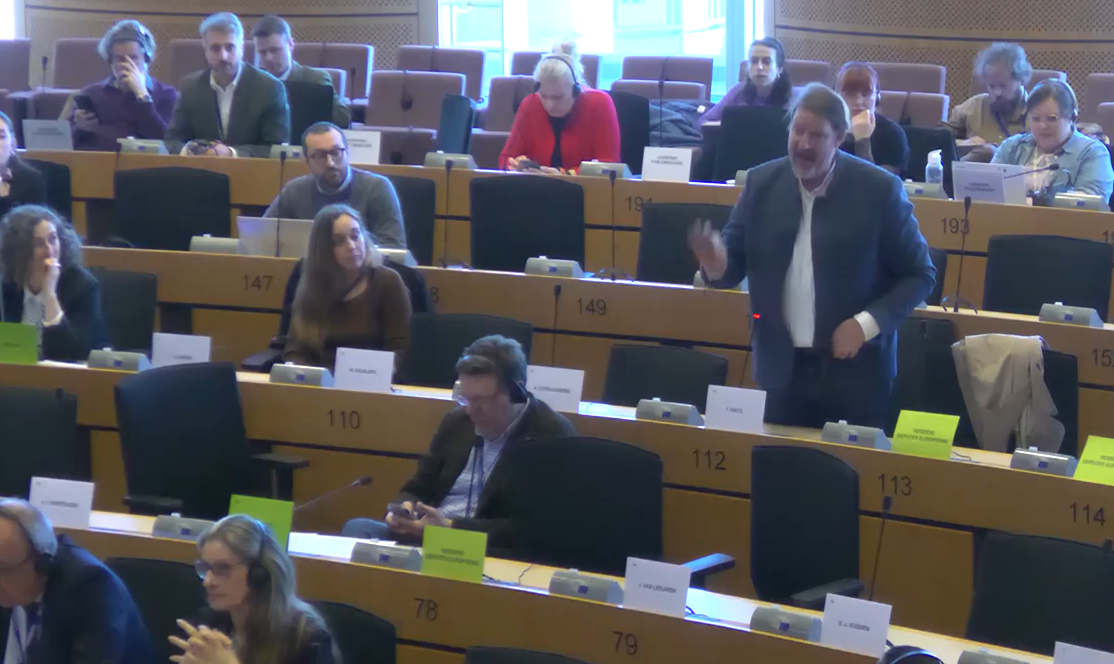
MEPs from across the political spectrum sharply criticised the European Commission over its handling of EU-Morocco trade relations covering occupied Western Sahara, raising concerns over legality, transparency and an apparent disregard for Parliament’s role.
SRI update
The following overview enlists stock-exchange registered companies with current or recent operations in occupied Western Sahara. Updated 6 May 2026